Cuero 18-Wheeler Accident Lawyer
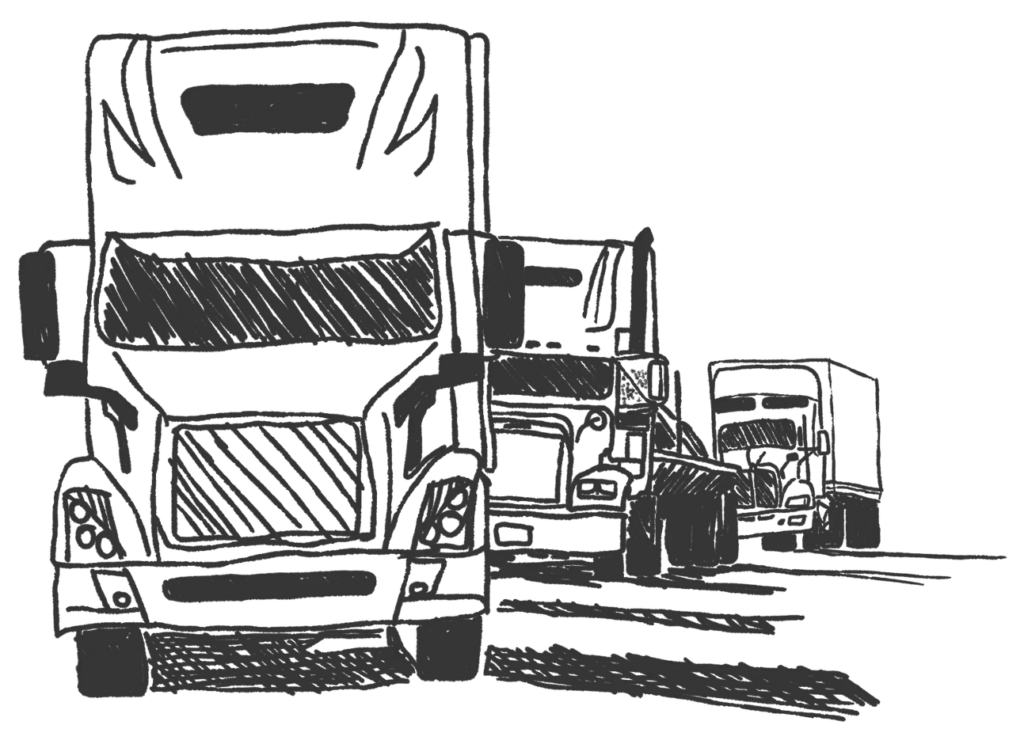
Cuero sits at a major intersection of State Highway 72, U.S. Highway 87, and U.S. Highway 183, placing it at the center of DeWitt County’s essential transit arteries. To serve regional distribution lines and the thriving Eagle Ford Shale energy sector, large commercial vehicles such as 18-wheelers, oilfield vacuum trucks, sand haulers, agricultural transport rigs, and oversized freight carriers pass through Cuero daily.
The physical effects of a collision between a regular passenger car and a fully loaded semi-truck weighing up to 80,000 pounds are disastrous. On two-lane rural highways, high-speed collisions can cause fatalities or serious, long-lasting bodily injuries.
At A2X Law, we provide aggressive, trial-ready legal representation for individuals and families injured in commercial truck crashes throughout Cuero, DeWitt County, and South Texas. We understand federal trucking safety regulations, know how to preserve critical electronic truck data, and aggressively hold corporate trucking companies and their insurance carriers accountable.
To review the specific details of your collision and evaluate your legal remedies, contact A2X Law today to schedule a paid consultation with our legal team.
The Complexities of Commercial Trucking Lawsuits
A typical passenger car accident is very different from a commercial truck accident claim. Commercial trucking operations are subject to strict state and federal regulations enforced by the Texas Department of Public Safety (DPS) and the Federal Motor Carrier Safety Administration (FMCSA). Establishing liability requires a thorough grasp of corporate liability frameworks, industry rules, and forensic evidence gathering.
Multiple Potentially Liable Parties
18-wheeler accidents often involve multiple corporate entities whose recklessness led to the crash, unlike ordinary car crashes where blame rests with one driver. These entities include:
- The Trucking Company (Motor Carrier): For negligent hiring, failing to perform mandatory background checks, forcing drivers to exceed federal hours-of-service limits, or neglecting fleet maintenance.
- The Commercial Truck Driver: For driving while fatigued, distracted driving, speeding, operating under the influence of drugs or alcohol, or making improper lane changes.
- Cargo Loaders and Freight Logistics Companies: For failing to secure goods adequately, distributing weight unevenly, or packing trailers with more weight than permitted, which can result in rollover or jackknife incidents.
- Maintenance Vendors and Mechanics: For neglecting to properly service vital safety parts like tires, steering linkages, and air brakes.
- Equipment Manufacturers: For mechanical defects, brake system failures, or tire blowouts caused by manufacturing flaws.
Critical Evidence We Preserve in 18-Wheeler Accident Claims
Commercial trucking companies and their insurance defense teams launch investigations within hours of a severe crash to limit corporate financial exposure. To build a successful claim, your legal team must act just as quickly to preserve critical electronic and physical evidence before it is altered, overwritten, or destroyed.
When A2X Law takes on an 18-wheeler accident claim in Cuero, we immediately issue formal spoliation letters to preserve key evidence, including:
- Electronic Control Module (ECM) & Event Data Recorder (EDR): The truck’s internal “black box” data, which logs vital pre-crash metrics including travel speed, braking application, engine RPMs, and sudden deceleration rates.
- Electronic Logging Device (ELD) Data: Digital records detailing the driver’s duty status, driving hours, rest breaks, and potential Federal Hours of Service (HOS) violations.
- Dashcam Footage and GPS Tracking: Forward-facing or cab interior video recordings and continuous satellite GPS telemetry tracking truck movement.
- Driver Qualification Files: The truck driver’s employment application, medical certification, drug and alcohol test results, commercial driver’s license (CDL) history, and previous safety infraction records.
- Maintenance and Inspection Logs: Historical service records detailing brake checks, tire replacements, annual DOT safety inspections, and pre-trip inspection reports.
Common Causes of Semi-Truck Crashes in DeWitt County
The unique mix of heavy oilfield transit, high speed limits, and narrow, non-divided rural highways throughout DeWitt County creates dangerous driving environments.
Our legal team represents victims injured in a broad spectrum of commercial trucking incidents, including:
- Driver Fatigue and Hours-of-Service Violations: To meet strict delivery deadlines, truck drivers may drive past the legal hourly limit, which can cause them to react slowly or nod off while operating a vehicle.
- Oilfield and Energy Sector Truck Collisions: Heavy sand haulers, water tankers, and equipment rigs operating at high speeds on rural country roads ill-equipped for heavy industrial traffic.
- Jackknife and Rollover Collisions: Sudden braking or improper steering maneuvers on wet or unpaved roads causing the trailer to swing outward or capsize into adjacent traffic lanes.
- Underride and Rear-End Accidents: Passenger vehicles sliding beneath the rear or side of a semi-trailer due to missing or defective underride guards or sudden truck stops without warning.
- Blind-Spot Collisions: Commercial vehicles changing lanes into occupied space without checking extended side and rear blind spots (“No-Zones”).
- Cargo Spills and Shift Collisions: Unsecured heavy industrial equipment or bulk materials spilling onto Highway 87 or Highway 183, creating severe multi-vehicle pileups.
Severe Injuries Sustained in 18-Wheeler Collisions
The occupants of smaller cars usually take the brunt of the kinetic energy in an accident because of the enormous mass difference between a 4,000-pound passenger car and an 80,000-pound semi-truck.
A2X Law manages claims involving severe, life-altering physical trauma, including:
- Traumatic Brain Injuries (TBIs): Violent head impacts resulting in skull fractures, intracranial hemorrhage, cognitive loss, or permanent brain damage.
- Spinal Cord Trauma and Paralysis: Severe compression or transection of the spinal cord resulting in paraplegia, quadriplegia, persistent nerve damage, or ruptured discs.
- Traumatic Amputations: Loss of hands, feet, or limbs due to catastrophic collision forces or crushing vehicle frame collapse.
- Severe Thermal and Chemical Burns: Toxic chemical cargo spills or explosive fuel tank ruptures can cause third- or fourth-degree burns that necessitate extensive skin grafts.
- Complex Orthopedic Fractures: Open reduction and internal fixation (ORIF) operations are necessary for several broken or crushed bones.
- Wrongful Death: Fatal truck crashes that leave surviving family members facing immense grief, funeral costs, and the loss of long-term financial support.
Recoverable Compensation in Texas Trucking Accident Claims
Victims of corporate trucking carelessness can pursue monetary compensation for all economic and non-economic damages resulting from the collision under Texas civil law.
Economic Damages
Concrete out-of-pocket financial losses, such as prior emergency medical transport, hospital stays, surgeries, specialized rehabilitation, anticipated future medical care, missed wages, reduced future earning capacity, and vehicle replacement expenses, are compensated by economic damages.
Non-Economic Damages
Non-Economic damages compensate for the non-monetary impact of physical trauma. This includes compensation for physical pain and suffering, mental anguish, physical impairment, loss of physical mobility, permanent scarring or disfigurement, and loss of life enjoyment.
Texas Proportionate Responsibility Rules
Under Chapter 33 of the Texas Civil Practice and Remedies Code, Texas applies a modified comparative fault standard (proportionate responsibility). You can recover financial damages as long as your percentage of fault for the crash is 50 percent or less. However, if a court or jury assigns you 51 percent or more of the blame, you are legally prohibited from recovering any damages. Trucking company insurance adjusters routinely try to blame passenger vehicle drivers for tailgating or failing to yield. We use forensic accident reconstruction experts to defeat shifting-fault arguments and protect your rights.
Essential Steps to Take After an 18-Wheeler Crash in Cuero
Taking immediate action following a commercial truck collision protects your health and establishes a strong legal foundation for your claim:
- Call 911 Immediately: Ensure law enforcement officers and emergency medical teams respond to the scene. Request an official police crash report.
- Obtain Immediate Emergency Medical Care: Get evaluated right away by trauma doctors. Immediate medical records directly link your injuries to the truck collision.
- Document the Crash Scene: Take pictures and videos of every vehicle involved, including truck company logos, DOT numbers, license plates, skid marks, road conditions, and obvious injuries, if you are physically able to.
- Identify Witnesses: Collect names, phone numbers, and contact details from any bystanders or motorists who witnessed the accident.
- Decline Recorded Statements to Trucking Adjusters: Do not give recorded audio statements or sign document releases for the trucking company’s insurance representatives without legal representation.
- Schedule a Paid Legal Consultation: Contact A2X Law to schedule a comprehensive legal consultation and begin an immediate evidence-preservation process.
Schedule a Legal Consultation with A2X Law
If you or a loved one suffered serious injuries in a semi-truck crash in Cuero, Yoakum, Yorktown, or anywhere across DeWitt County, secure disciplined, trial-ready representation. The team at A2X Law bring local familiarity and rigorous courtroom preparation to every client’s case.
Contact A2X Law today or reach out online to schedule your initial consultation with our legal team.