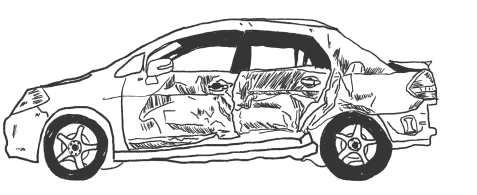
Drunk Driver Accident Lawyer in Pecos
How Alcohol Impairs a Driver’s Ability to Operate a Vehicle
Driving safely requires constant attention and the ability to make quick decisions. Motorists must monitor traffic, maintain appropriate speeds, recognize hazards, and respond to changing road conditions. Alcohol can interfere with these abilities in several ways. Even when someone believes they are capable of driving, alcohol can affect the brain and nervous system before obvious signs of intoxication become apparent.
Some of the most concerning effects include:
- Slower Reaction Time: An impaired driver may take longer to recognize a hazard and apply the brakes or steer away from danger.
- Reduced Judgment: Alcohol can affect decision-making, causing drivers to underestimate risks or make unsafe choices.
- Poor Coordination: Impaired motor control can make it difficult to maintain a lane, steer accurately, or operate vehicle controls.
- Reduced Concentration: A driver may struggle to focus on multiple traffic conditions or recognize developing hazards.
- Impaired Vision: Alcohol can interfere with visual processing, depth perception, and the ability to recognize objects or vehicles.
- Increased Risk-Taking: Intoxicated motorists may speed, follow too closely, or disregard traffic signals and other roadway rules.
These effects can combine to make an impaired driver especially dangerous. A motorist who cannot recognize a slowing vehicle or respond to an approaching intersection may cause a serious collision in seconds. The danger does not depend on whether the driver intended to hurt someone. When a person chooses to drive while impaired and causes an accident, the consequences for injured victims can be substantial.
Drunk Driving Accidents Can Happen Anywhere in Pecos
Pecos is an important community in Reeves County, with local traffic, commercial activity, highway travel, and connections to surrounding West Texas communities. Drivers regularly share the road with passenger vehicles, motorcycles, commercial trucks, and work-related transportation. An impaired motorist can create dangerous conditions in any of these environments. For example, a drunk driver may cross into oncoming traffic on a local roadway, fail to stop at an intersection, or lose control while traveling along a highway. Other motorists may have little opportunity to avoid a vehicle that is moving unpredictably.
Certain accident scenarios are particularly concerning:
- Head-On Collisions: An intoxicated driver may drift across the centerline and strike an approaching vehicle. These crashes can produce devastating injuries because of the combined force of the vehicles.
- Rear-End Accidents: Alcohol impairment can prevent a driver from recognizing slowing or stopped traffic, causing them to collide with the vehicle ahead.
- Intersection Crashes: A drunk driver may disregard a stop sign or traffic signal, fail to yield, or turn into the path of another vehicle.
- Wrong-Way Accidents: An impaired motorist may enter a roadway in the wrong direction, creating a serious risk for approaching drivers.
- Pedestrian and Bicycle Accidents: People walking or cycling have little physical protection when struck by an automobile. An intoxicated driver’s inability to recognize their presence can result in catastrophic injuries.
- Motorcycle Collisions: Drivers who fail to recognize motorcycles or accurately judge their speed and distance may cause particularly serious accidents.
Regardless of where a collision happens, the important questions include what caused the accident, whether alcohol impairment contributed to the driver’s conduct, and whether another party may be legally responsible for the resulting injuries.
What Happens When a Drunk Driver Causes an Accident in Texas?
A drunk driving accident may involve both criminal proceedings and a separate civil personal injury claim. These are two different legal processes, and understanding the distinction is important for accident victims. A criminal case focuses on whether the driver violated applicable criminal laws. Depending on the circumstances, an impaired motorist may face charges involving driving while intoxicated (DWI), property damage, bodily injury, or intoxication manslaughter.
A civil personal injury claim serves a different purpose. It allows an injured individual to pursue compensation for legally recognized damages caused by another person’s negligence or other actionable conduct. You do not necessarily have to wait for the criminal case to conclude before exploring a civil claim. The two proceedings are separate, although evidence from a criminal investigation may sometimes be relevant to a related personal injury matter.
A criminal conviction can be important evidence, but a civil negligence claim does not always require a criminal conviction. The applicable legal standards and evidence requirements are different. For someone injured by a drunk driver in Pecos, this distinction can be especially important. Even if criminal charges are pending or the driver disputes the allegations, there may still be grounds to investigate a personal injury claim.
Can You Sue Someone for Injuries Caused by a Drunk Driver?
Yes. If an impaired driver’s negligent or otherwise legally actionable conduct causes an accident and injuries, the injured person may have grounds to pursue a civil claim. In a typical negligence case, the injured person generally must establish that the defendant owed a duty of reasonable care, breached that duty, and caused legally recognizable damages.
Driving while intoxicated can be highly relevant to determining whether a driver failed to exercise reasonable care. Depending on the circumstances, violations of applicable safety laws may also be relevant to a negligence-per-se analysis. However, establishing a claim still requires evaluating the facts and applicable legal standards. The investigation may need to address how the collision occurred, the driver’s condition, the injuries sustained, and whether any other circumstances contributed to the accident.
Potential evidence may include:
- Police accident and investigation reports.
- Arrest records and available criminal case documentation.
- Breath or blood alcohol test results obtained through appropriate legal procedures.
- Witness statements from passengers and other motorists.
- Photographs and video recordings of the accident scene.
- Available surveillance or dashboard camera footage.
- Medical records documenting the injuries.
- Vehicle damage and accident reconstruction evidence.
No single piece of evidence necessarily tells the entire story. Understanding how the evidence fits together can be essential when evaluating responsibility.